
Article
Getting Ready for 2027: What the BC Energy Step Code Means for Part 9 Builders Now
Step 3 and EL-1 are the BC minimums today, and 2027 is expected to bring more. What Part 9 home builders on Vancouver Island should do now.
Post Details
Published
November 25, 2026
Read the full article below, then return to the archive for more insights and updates.
Getting Ready for 2027: What the BC Energy Step Code Means for Part 9 Builders Now
If you build single-family homes, duplexes, townhouses or other Part 9 buildings in British Columbia, energy performance is no longer something you add at the end. It is part of your building permit, your framing schedule and your occupancy sign-off.
The rules have changed a lot in the last few years, and 2027 is shaping up to be another year of change. Here is where things stand at the end of 2026, what is expected next, and what you can do now so your next project does not get caught out.
Two step codes, one permit
BC now has two step codes that work side by side. Both are part of the BC Building Code, and both apply to Part 9 homes.
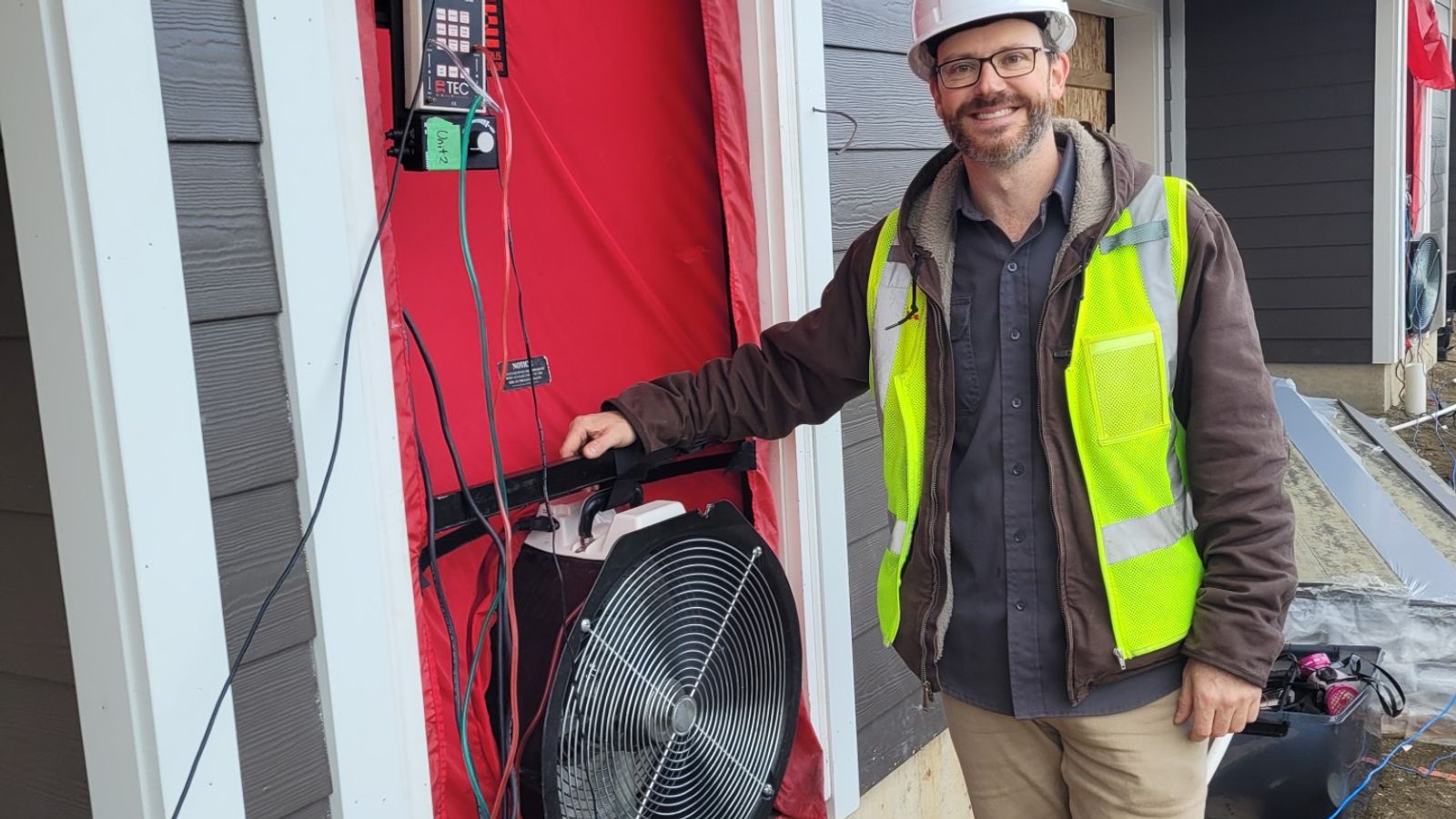
The BC Energy Step Code measures how much energy a home uses and how well its envelope performs. It runs from Step 1 to Step 5, with Step 5 being net-zero energy ready. Instead of telling you exactly how to build, it sets performance targets and lets you choose how to meet them. Compliance is shown with a whole-home energy model before construction and an airtightness (blower door) test before occupancy.
The Zero Carbon Step Code measures greenhouse gas emissions from the home's equipment, mainly space heating, water heating and cooking. It has four levels: EL-1 (measure only), EL-2 (moderate), EL-3 (strong) and EL-4 (zero carbon). At the higher levels, gas furnaces, boilers and water heaters are effectively replaced by electric options such as heat pumps.
Where the provincial minimums are today
For Part 9 buildings, the provincial minimums are:
- Energy Step Code: Step 3. Since May 1, 2023, Steps 1 and 2 have been "reserved" in the BC Building Code and no longer meet the minimum. The Province describes this first step up as making most new buildings about 20% more energy efficient than the 2018 code.
- Zero Carbon Step Code: EL-1. Since March 10, 2025, the Province has required most new buildings to meet at least EL-1. That means emissions are modelled and reported, but there is no cap on them yet. If your energy advisor is already producing Step Code compliance reports, the emissions figure is usually included.
These are floors, not ceilings. Local governments can require higher steps of either code through a bylaw, and many have.
Your municipality may already ask for more
A common and costly surprise is a builder who designs to the provincial minimum and then finds out the local bylaw asks for a higher step or a higher emissions level. Requirements are set by permit date and by location, so two lots a short drive apart can have different targets.
Before design is locked in, check with your local building department (the "authority having jurisdiction") for:
- Which Energy Step Code step applies on the date you will apply for a permit
- Which Zero Carbon level applies, and whether gas appliances such as fireplaces or cooktops are still allowed
- Whether a mid-construction airtightness test is required, or only the final test
- Any upcoming bylaw changes, since local governments are expected to give notice before raising requirements
What 2027 is expected to bring
The Province's stated goal is for all new buildings to be net-zero energy ready by 2032, with the minimum step rising "every few years" until then. The Step Code guidebook published by the Province in June 2024 expected the next increase in 2027, with the Part 9 prescriptive Step 3 option expected to stay in place until then.
For Part 9 builders, that next increase is widely expected to be Step 4. In practice, Step 4 means a tighter envelope, better windows and more careful air sealing than most builders use for Step 3 today.
An important caution: as of late November 2026, we have not seen an official order that sets the exact date or details of the 2027 change. The Province's own Step Code pages were last updated in mid-2025. Until the change is published, treat 2027 as the expected timeline, not a confirmed one, and watch for an official announcement.
There is one firm 2027 date worth knowing. FortisBC's New Home Program is ending, with all rebates closing on February 28, 2027, or sooner if funding runs out. If you have a home that qualifies, the paperwork needs to be in before then. We covered the details in our post FortisBC New Home Program Coming to an End.
Six things Part 9 builders can do now
- Confirm your requirements before design. Ask your local building department which Energy Step Code step and Zero Carbon level apply on your expected permit date. If your permit will land in 2027, ask whether a change is coming.
- Bring in an energy advisor early. A whole-home energy model is needed for the building permit. When the model is run at the design stage, you can test trade-offs such as wall assemblies, window specs and heating systems while changes are still cheap.
- Design for Step 4 even if you only need Step 3. If a project will be built or sold over the next few years, building one step above today's minimum is a sensible hedge. It also gives you room for error at the final test.
- Make airtightness a whole-crew job. Airtightness is often the most cost-effective way to improve your results, but it depends on every trade. Plan your air barrier, brief your subs and seal penetrations as you go.
- Book a mid-construction blower door test. Some municipalities require it. Even where they do not, testing before drywall lets you find and fix leaks while they are still easy to reach, instead of chasing them at the final test.
- Plan your heating and hot water with emissions in mind. EL-1 only asks you to report emissions today, but higher Zero Carbon levels are already in place in some communities. Heat pumps for space and water heating keep your design ready for those levels and may help with rebates.
You can also read our earlier posts on Step Code basics for Part 9 builders and working with an energy advisor.
Plan ahead, not at the blower door
The builders who find Step Code easiest are the ones who plan for it at the drawing stage, not the ones who discover a problem at the final test. With a likely step up in 2027 and rebates closing in February, now is a good time to look at the homes you have in design.
At Lighthouse Energy Management, our NRCan-registered energy advisors help builders across Vancouver Island with energy modelling, mid-construction and final airtightness testing, and as-built Step Code compliance. We give clear, unbiased advice so you know exactly what your next project needs.
Ready to talk about your next build? Book an appointment.
Sources
- Province of BC, BC Energy Step Code (page updated June 9, 2025)
- Province of BC, Zero Carbon Step Code (page updated June 9, 2025)
- Province of BC, Step Code requirements (page updated July 28, 2025)
- Step Code Council and Ministry of Housing, BC Energy Step Code and Zero Carbon Step Code Guidebook, v3.0 (June 2024)
- Lighthouse Energy Management, FortisBC New Home Program Coming to an End (October 2, 2026)